Paintless Dent Repair or Body and Paint: Which Does Your Dent Need?
The answer comes down to what happened to the paint when the metal moved.
October 14, 2026 · 4 min read
A shopping cart rolls into your door in a parking lot, or a ball hits the fender, or hail comes through in June. You walk up to the car and there is a dent, and the first thing you want to know is whether it's a ten-minute fix or a week without the car. The difference between paintless repair and traditional body and paint explains most of the answer.
What paintless dent repair is
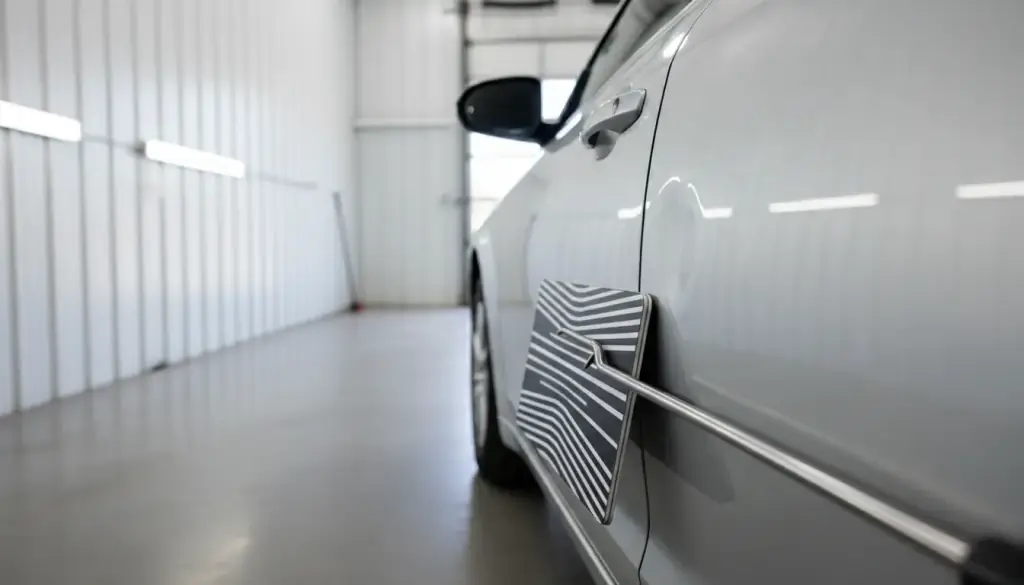
Paintless dent removal, sometimes called paintless dentless repair, works the metal from behind. A technician gets access to the back of the damaged panel, then uses specialized rods and tools to push the dent out in many small, controlled moves, with a light on the surface to read the reflections and see when the line is true. The paint stays on the panel the whole time. Nothing is sanded, filled or sprayed.
That's the appeal. The factory finish is the best finish your car will ever have, and if the repair can keep it, that's the best result. It also tends to be quicker than a repaint, because there's no waiting on primer and cure times.
Which dents qualify
Paintless work depends on the paint surviving the dent. Flexible modern paint can stretch a little without cracking, which is why a rounded dent from a cart or a hailstone often comes out cleanly. These are the traits technicians look for.
- The paint is not cracked, chipped or scratched through
- The dent is shallow and soft-edged rather than sharply creased
- It is in a spot a technician can reach from behind
- The metal has not been stretched thin by a hard impact
- It's not on the very edge of a panel or along a tight body line
Hail damage is a classic example, since it leaves dozens of round, shallow dents with the paint intact. Door dings from parking lots are another one. Ron Kirk's Body Shop lists paintless dent removal alongside bumper repairs and general dent removal, from major dents to minor scratches, so you can bring the car in and get a straight answer about which path fits.
Which dents do not
A sharp crease changes the metal. It stretches and work-hardens at the fold, and no amount of patient pushing puts it back flat. If the paint has cracked, there's a second problem: the bare spot invites rust, and no tool from behind fixes that. Panels with a double-layer structure, such as some door edges and roof rails, can also be too hard to reach.
When the answer is no, it isn't a failure of the method. It just means the repair is going to include refinishing, and that is the traditional body and paint route.
What traditional body and paint involves
The damaged area is worked until the metal is close to its shape, and the surface is sanded and, where needed, covered with a thin layer of filler to make it perfectly smooth. Then it is primed, sanded again, and sealed. Color goes on in several coats, followed by clear coat, which gives the finish its depth and protects the color underneath. Each stage needs time to dry or cure properly, and skipping that time is how paint fails later.
Ron Kirk's does this work on site, with its own spray booth, plus pinstriping and auto and truck painting. A customer wrote on the shop's site that a repair might take a little longer than you expect, but that is because of the quality workmanship. Good paint is a patient job.
Why matching the color is the hard part
Your car's paint code gets you started, but it doesn't get you finished. Paint fades from sun, and the same code can come out a shade different from batch to batch. A finish that looks right in the booth can look off in daylight. That's why the shop uses computerized color matching, which reads the actual color on your car and works out a formula to match it, rather than trusting the label on the door jamb.
The spray booth is the other half of the story. It keeps dust out of the wet paint, gives the painter even light to judge color and coverage, and holds a consistent temperature while the coats flash and cure. Painting a car in an open shop leaves specks you can feel with a fingertip. Good matching often means blending into the neighboring panel, so there's no visible line where new paint meets old.
How to decide
Look at the dent in good light. Run a fingertip along the edge. If the paint is intact and the dent is a shallow dish, ask about paintless. If there's a crease, a crack, or a ding on a sharp edge, expect body and paint. Either way, a technician has to see it in person. Photos don't tell you whether the metal stretched.
The estimate is free. Ron Kirk's Body Shop is at 501 Vermont Ave in Holton, open Monday through Friday from 8:00 am to 5:00 pm, and the number is (785) 364-2931.
Ron Kirk's Body Shop, (785) 364-2931
Call (785) 364-2931More articles
The First Hour After a Deer or Bird Strike on a Kansas Highway
Most of what matters happens in the first sixty minutes, and very little of it has to do with the car.
Windshield Chip or Crack: Repair It or Replace the Glass?
Size matters, but so do location and age, and the clock starts the moment the rock lands.